
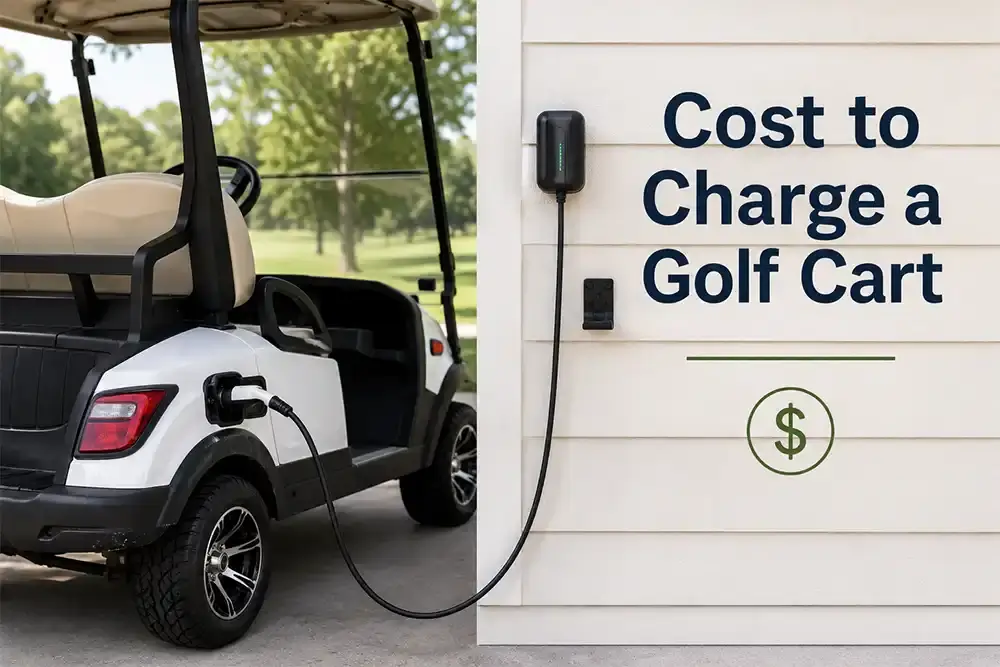
Summary: Charging a golf cart costs much less than most people expect. In many cases, a full charge costs between $0.75 and $2.00 depending on your battery size, charger, and local electricity rates. In this guide, we’ll explain how charging costs are calculated, what affects electricity use, and why lithium-powered golf carts are often the most economical choice.
One of the first questions buyers ask is how much it costs to own an electric golf cart.
Fuel costs are a major expense for traditional vehicles, but electric golf carts are much cheaper to operate. Charging at home typically costs only a few dollars each week for most owners.
If you’re considering a Sierra golf cart or another electric model, understanding charging costs can help you budget for long-term ownership.
Let’s break down the numbers.
Quick Answer
For most homeowners, charging a golf cart costs between $0.75 and $2.00 per full charge.
If you charge your cart several times each week, monthly electricity costs often range from $10 to $30 depending on usage and local utility rates.
Many owners spend less each month charging their golf cart than they do filling a single gas-powered lawn mower.
What Determines the Cost to Charge a Golf Cart?
Several factors affect how much electricity your golf cart uses.
These include:
- Battery size
- Battery type
- Local electricity rates
- Charger efficiency
- How often you drive
- Terrain and passenger load
The larger the battery pack, the more electricity it requires to fully recharge.
However, larger batteries often provide greater driving range.
How Much Electricity Does a Golf Cart Use?
Most golf carts use between 5 and 15 kilowatt-hours (kWh) for a complete charge.
Here’s a simple example.
If your battery requires 10 kWh and your electric company charges $0.15 per kWh:
10 × $0.15 = $1.50
That means a complete recharge costs about $1.50.
Even if electricity prices are higher, charging remains very affordable compared to fueling a gas-powered vehicle.
Average Charging Costs
| Electricity Rate | Estimated Cost Per Full Charge* |
|---|---|
| $0.12 per kWh | $1.20 |
| $0.15 per kWh | $1.50 |
| $0.18 per kWh | $1.80 |
| $0.20 per kWh | $2.00 |
*Example based on a 10 kWh battery pack.
Actual costs will vary depending on your golf cart and utility provider.
How Much Does It Cost Per Month?
The average owner charges a golf cart several times each week.
Here’s a general estimate.
| Charging Frequency | Estimated Monthly Cost |
| Once per week | $5 to $10 |
| Two to three times per week | $10 to $20 |
| Daily use | $20 to $40 |
Even frequent drivers often spend less than the cost of one tank of gasoline each month.
Are Lithium Golf Carts Cheaper to Charge?
Lithium batteries don’t necessarily use less electricity for the same amount of driving, but they are more efficient.
They lose less energy during charging.
They also recharge faster and maintain stronger performance throughout the battery cycle.
Because lithium batteries charge more efficiently, owners often spend slightly less on electricity over time.
Another advantage is that lithium batteries rarely require replacement as often as lead-acid batteries.
That can significantly reduce long-term ownership costs.
If you’re comparing battery technologies, read our guide on How Long Do Golf Cart Batteries Last? to learn how battery lifespan affects overall value.
Dealer Tip
At Daytrip Carts, many customers focus on the purchase price when comparing golf carts.
The real value often comes from lower operating costs over time.
A quality lithium-powered Sierra golf cart can provide years of dependable service while requiring very little maintenance compared to older lead-acid systems.
Does Charging Every Day Increase Your Electric Bill?
Daily charging does increase electricity use, but usually by only a small amount.
For most homeowners, charging a golf cart every day adds only a modest amount to the monthly electric bill.
The exact amount depends on:
- Distance driven
- Battery size
- Utility rates
- Charger efficiency
Most owners are surprised by how inexpensive charging really is.
Can You Save Money While Charging?
Yes.
A few simple habits can reduce charging costs and help extend battery life.
Charge your golf cart after normal use instead of allowing the battery to become completely discharged.
Use the charger recommended by the manufacturer.
Store your golf cart in a covered area whenever possible.
Keep your batteries properly maintained.
For many utility companies, charging during off-peak hours may also lower electricity costs.
Does Cold Weather Affect Charging Costs?
Colorado weather can affect battery performance.
Cold temperatures temporarily reduce battery efficiency and driving range.
That means your golf cart may need charging more often during winter months.
This doesn’t dramatically increase electricity costs, but it can slightly reduce the distance you travel on each charge.
Storing your golf cart inside a garage helps maintain battery performance throughout the year.
Charging at Home vs. Public Charging
Most golf cart owners charge at home.
A standard household outlet is enough for many chargers, although charging times vary depending on the battery type and charger.
Some commercial properties and planned communities also provide charging stations for electric vehicles and golf carts.
Regardless of where you charge, electricity remains one of the lowest operating costs associated with golf cart ownership.
Is a Lithium Golf Cart Worth It?
When comparing ownership costs, many buyers find that lithium-powered golf carts provide better long-term value.
Lithium batteries:
- Last longer
- Charge faster
- Require almost no maintenance
- Deliver consistent performance
- Weigh less than lead-acid batteries
Although the purchase price may be higher, lower maintenance and longer battery life often offset the initial investment.
For many Colorado homeowners, that’s a smart long-term decision.
Why Charging Costs Matter
Understanding charging costs helps you estimate the true cost of ownership.
Electric golf carts are inexpensive to operate and maintain compared to many other neighborhood vehicles.
If you’re shopping for a new golf cart, battery technology should be one of the first features you compare.
At Daytrip Carts, we offer Sierra golf carts with advanced lithium battery systems designed for long driving range, dependable performance, and low maintenance.
Our team can help you compare models and choose the right golf cart for your lifestyle.
Final Thoughts
Charging a golf cart is one of the most affordable parts of ownership.
Most owners spend only a few dollars each week on electricity, making electric golf carts an economical option for neighborhood transportation, recreation, and everyday use.
When paired with a long-lasting lithium battery, today’s golf carts deliver excellent value and dependable performance.
If you’re ready to explore a new Sierra golf cart, visit Daytrip Carts to browse available models or speak with our team about finding the right fit for your needs.
Frequently Asked Questions
How much does it cost to fully charge a golf cart?
Most golf carts cost between $0.75 and $2.00 for a full charge depending on battery size and local electricity rates.
Does charging a golf cart use a lot of electricity?
No. Golf carts use relatively little electricity compared to most household appliances or electric vehicles.
Is it cheaper to charge a golf cart at night?
In some areas, utility companies offer lower off-peak electricity rates overnight. Check with your local provider to see if time-of-use pricing is available.
Should I charge my golf cart after every use?
Yes. Charging after each use helps maintain battery health and keeps your golf cart ready for your next trip.
Are lithium golf carts cheaper to own?
In many cases, yes. Lithium batteries last longer, require less maintenance, and often reduce long-term ownership costs despite the higher purchase price.
How can I lower my golf cart charging costs?
Use the correct charger, keep your batteries properly maintained, avoid deep discharges, and charge during off-peak hours if your utility provider offers reduced electricity rates.